
On 10 January 1860, a five-storey cotton mill in Lawrence, Massachusetts collapsed in seconds, killing dozens to over a hundred workers inside. The warning signs had been there for years. Here’s what the Pemberton Mill disaster still teaches safety teams today — and the first episode of our new video series, Seconds from Safety.
The Collapse
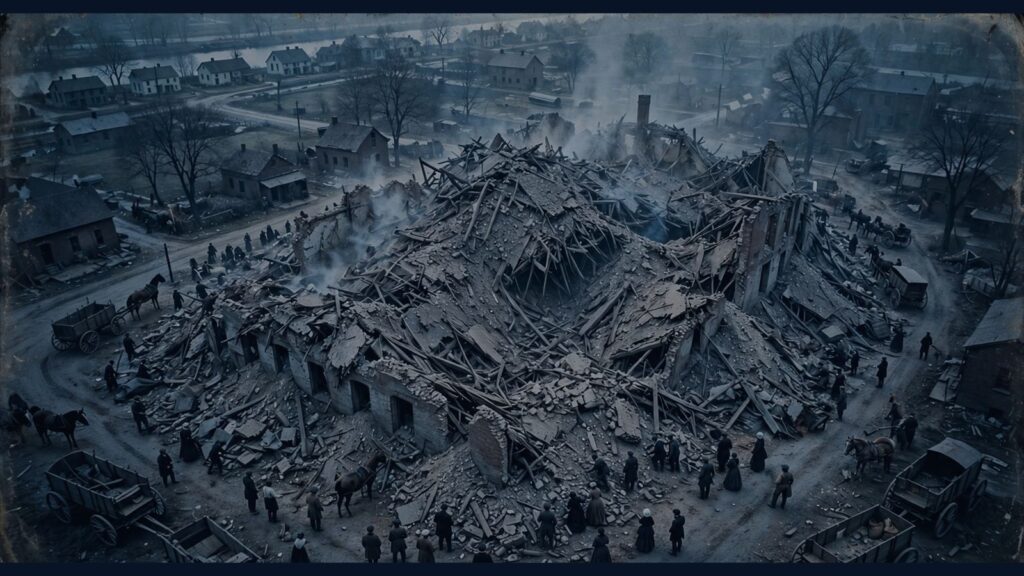
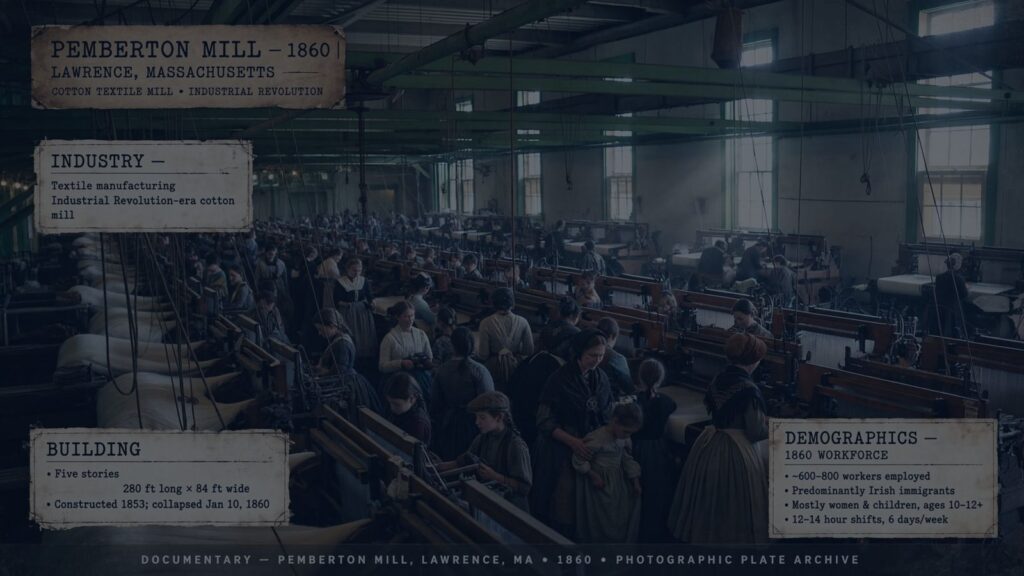
On Tuesday, 10 January 1860, at about 5 p.m., the five-storey Pemberton Mill in Lawrence, Massachusetts collapsed in seconds with several hundred workers inside, mostly women and children. Estimates of the dead range from about 90 to 145, with roughly 166 injured. That night, around 9:30 p.m., a lantern ignited cotton waste in the wreckage, and fire swept through, trapping survivors who had lived through the initial collapse. It remains one of the deadliest industrial disasters in American history.
Warnings Nobody Acted On
The signs were there well before the collapse. Workers reported the building shaking when machinery ran together. One overseer had long thought the structure weak, with thin walls and oversized windows; a superintendent even told the mill’s engineer the walls looked insufficient. Moments before the collapse, part of a brick wall was seen to bulge. No one stopped the looms, and no one checked whether the structure could still carry the load it now held.
What Went Wrong
The mill’s newer owners had packed in more machinery — thousands of spindles and hundreds of looms, much of it heavy equipment on the upper floors. The floors rested on slender cast-iron columns, and when those columns failed, the load had nowhere to go. The official inquest found the cause was the weakness of that cast-iron shoring: some columns were barely an eighth of an inch thick on one side, because the core had shifted during casting. The columns had been bought by the piece, not by weight, and were never tested before being installed.
The Root Cause
This wasn’t one bad casting — it was a system failure. Safety margins were thin, purchasing rewarded speed and price over quality, nobody verified the supplier’s work, and when the machine load grew, nobody revisited the original design assumptions. Everyone assumed someone else had checked. The engineer blamed the owners, and no one was ever punished.
Modern Lessons
The same gaps still cause failures today.
- Safety (ISO 45001): Treat any report of unusual movement, noise, or cracking as a stop-work trigger. Manage change before it happens (clause 8.1.3) and prepare for emergencies, including rescue and fire (clause 8.2).
- Quality (ISO 9001): Test critical components before they enter service and require verified release (clauses 8.4 and 8.6) — inspection costs far less than rebuilding. Buy on specification, not price per piece, and re-run load calculations whenever equipment is added (clause 8.5.6).
- Sustainability (ISO 14001): Identify the environmental risk a structural failure like this creates (clause 6.1). Extending asset life through proper inspection saves materials and embedded carbon.
Watch Episode 1
This story is Episode 1 of Seconds from Safety by Wema — 5-minute lessons from history’s industrial disasters, built for modern QHSE and safety teams.
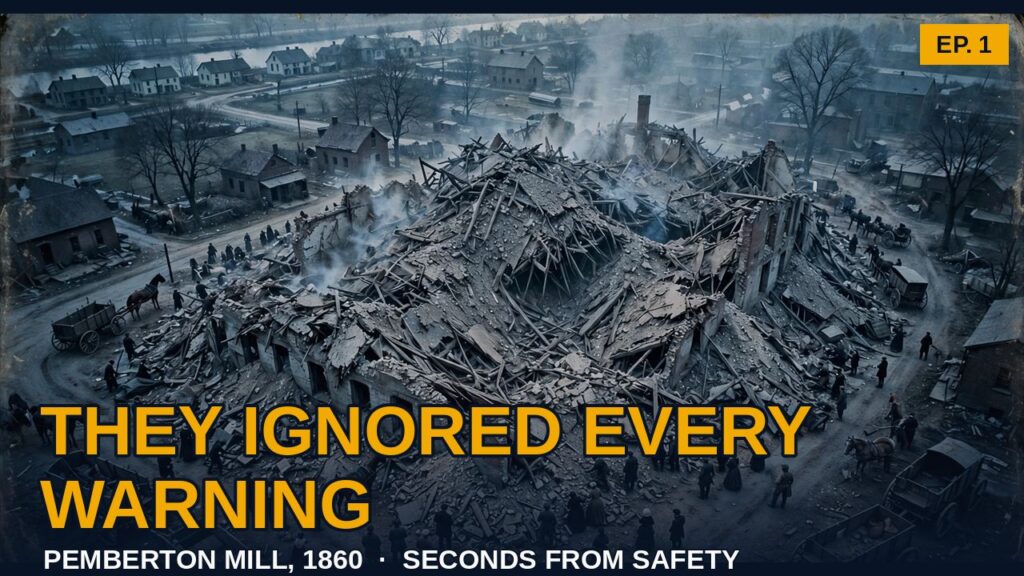
Watch on the Seconds from Safety YouTube channel →
Sources
- The Pemberton Mill Disaster — New England Historical Society
- Pemberton Mill — Wikipedia
- Fall of the Pemberton Mills at Lawrence, Massachusetts — Library of Congress, item 96509335